![[{[item.product.name]}]]([{[item.product.photo.url]}] 75w)
For free delivery are missing -,--
Order Summary
Sum NET 0,00 €
Sum Gross 0,00 €
Price includes discounts

wyszukiwarka

Kitchen Hoods
Number of products : 16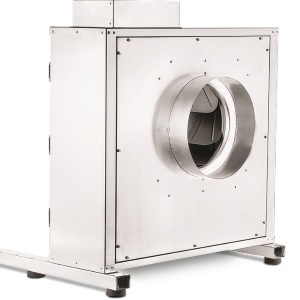
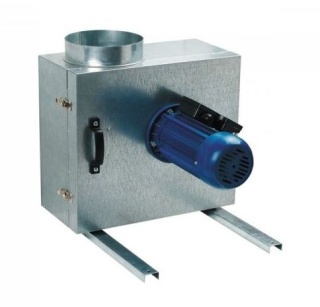
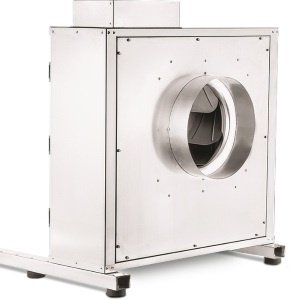
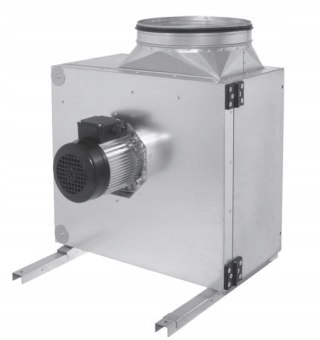
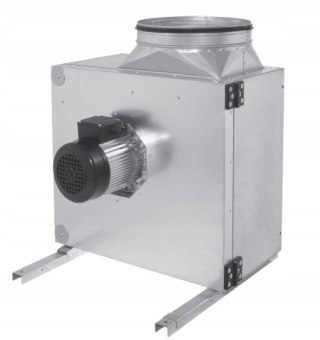
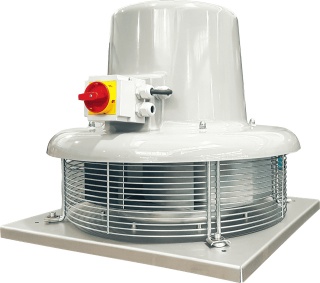
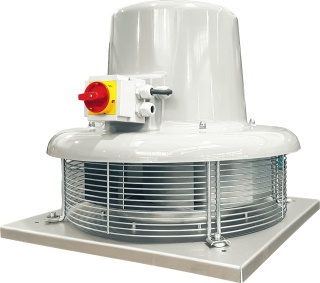
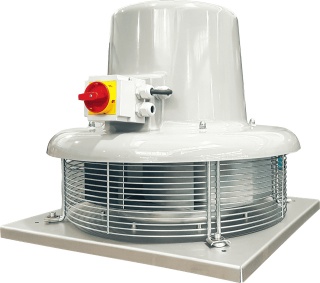
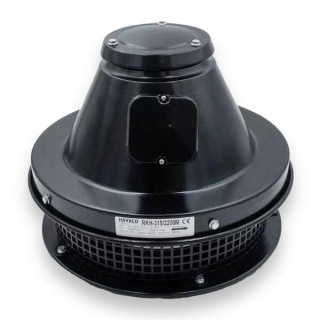
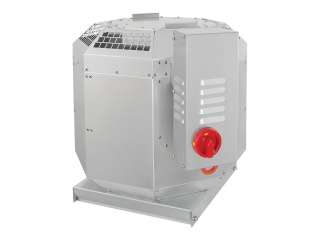
Kitchen fans for eaves – catering and collective kitchens
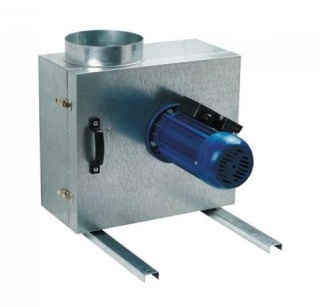
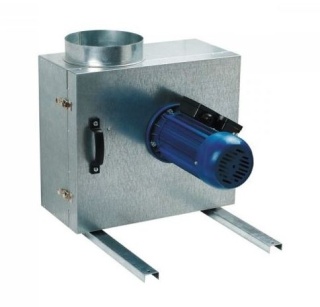
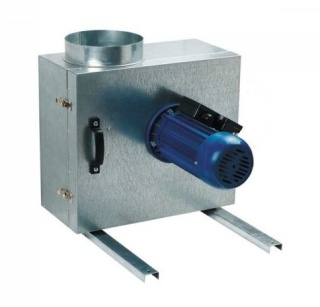
Kitchen fan is equipment designed for continuous operation with hot, moist and greasy air – conditions in which a normal channel fan quickly loses performance and fails. In this category you will find 16 equipment for food hoods: Harmann IKB insulated canal fans from 2300 to 5000 m3/h, COOKVENT units, Centrifugal KSK from 160 to 315 and RKH roof fans, WVPKH and Rooftec. Versions 230 V and 400 V, shipment from wholesale warehouse in Kielce.
How is a kitchen fan different from a normal one?
Three things, and each of them matters in a kitchen that works every day for several hours. First, temperature resistance – air from above plates and fryers can be hot, and kitchen structures are adapted to work under such conditions. Second location of the engine outside the air stream in many models, so that the fat does not settle on windings and does not reduce drive life. Third cleaning structure – the grease rotor loses balance, noises and loads of bearings, so service access here is a utility parameter, not an addition.
Which fan for what kitchen?
| Situation | Appropriate device | Why is that |
|---|---|---|
| Small gastronomy, bar, pizzeria – exhaust through the roof, limited budget | Kitchen roof fan RKH-315M, 1800 m3/h | The lowest cost of entry in this category, noise and fat stay out of the premises |
| Restaurant kitchen – installation within the channel, need to quiet down | Harmann IKB-315 (2300 m3/h, 230 V) or IKB-355 (2800 m3/h, 230 V) | Insulated enclosure reduces noise transferred to the room; single-phase power supply |
| Large kitchen, hotel, dining room, catering | IKB-400 (4000 m3/h) or IKB-450 (5000 m3/h), both 400 V | Performance under an extensive technological string and several hoods |
| Installation with high resistance – long channels, filters, dampers | Centrifugal fans KSK160-4D, KSK200-4D, KSK250-4D, KSK315-2D (400 V) | Radial design maintains performance with high spring |
| Required silent operation of the device during the channel | COOKVENT 250/2700T and 315/3400T, 400 V | Acoustically insulated versions, adapted to kitchen conditions |
| Roof mounting, continuous work | WVPKH-250-1400 (230 V and 400 V), WVPKH-315-1400 (400 V), Rooftec 250/2200S and 315/3900S | Weather-resistant housing, device outside the operating space |
How do I calculate the efficiency of the fan to the eyepiece?
In gastronomy, productivity is derived from the surface of the hood and the air speed in its plane, usually taken around 0,25–0.3 m/s for side hoods. Formula: eave surface in m2 × speed in m/s × 3600.
| Dimension of the eaves | Indicative performance | Example model |
|---|---|---|
| 1,5 × 1,0 m | approx. 1400–1600 m3/h | RKH-315M, KSK160-4D |
| 2,0 × 1,1 m | approx. 2000-2400 m3/h | IKB-315, KSK200-4D, Rooftec 250/2200S |
| 2,5 × 1,2 m | approx. 2700–3200 m3/h | IKB-355, COOKVENT 250/2700T, KSK250-4D |
| 3,0 × 1,3 m and more | from approx. 3,500 m3/h | IKB-400, IKB-450, KSK315-2D, Rooftec 315/3900S |
Example: 2.0 × 1.1 m hood has 2.2 m2 surface area. At 0,25 m/s, 2.2 × 0.25 × 3600 = 1980 m3/h, i.e. an IKB-315 class device. The result includes a supply of resistance to installation, because the catalog m3/h applies to low spring work. Indicative values – the ventilation design is binding and higher speeds are taken with the hoods over high heat loads.
The most common error in gastronomy: no compensation air
The kitchen that draws 3000 m3/h must take the air from somewhere. Without organized ventilation in the premises there is a vacuum, and with it a string of reverses from the channels, difficult to open doors, draughts from the side of the room and, in extreme case, a disturbance in the operation of devices with an open combustion chamber. It is assumed that the air supply should cover the vast majority of the exhaust streamand the difference maintains a slight vacuum preventing the smell from spreading to the room. Without this even the best selected fan will not achieve design performance.
Canal or roof?
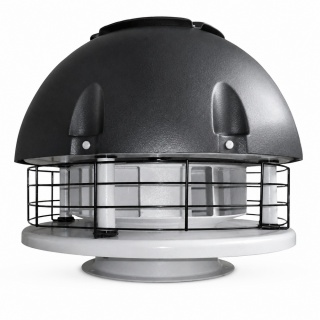
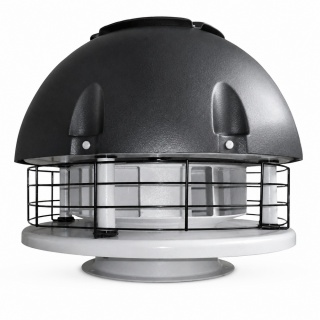
Roof fan is noise, vibration and oily air outside the building, and the service is carried out without entering the premises during the working hours – that is why in gastronomy it is the basic solution wherever access to the roof is. Channel fan It is installed during the installation: it works in the premises in the building, on the ground floor of multi-family buildings and where the ejection leads to the side or through an existing chessboard. Acoustically isolated versions are mandatory in such a situation if the channel passes over the consumption room.
Installation and operation – 6 rules
- Clean labyrinth filters in the hood regularly, in an intense kitchen even every day. It's the first barrier to keep fat from the canal and the fan.
- Plan a search in the sewer. The catering installation requires periodic cleaning and the section to which it does not have access becomes a real fire hazard.
- Lead the channel with a drop towards the hoodso that the condensates and fat flow to capture, rather than accumulate in route breakdowns.
- Cut the vibrations. The flexible connector on the corners and the damping base on the roof unit is a condition that the device is not heard in the room.
- Consider the rotation adjustment. Working off-peak significantly reduces energy consumption and noise – fan power changes roughly with the third power of speed.
- Check the power before ordering. Some models are only available in the 400 V version – it is worth confirming before the device hits the object.
Complete the catering installation
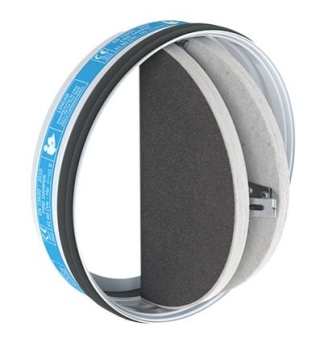
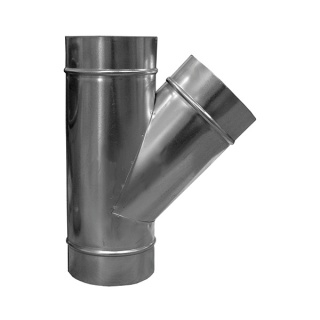
You'll get the rest of the system to the fan: Spiro channels and rectangular channels, silencers, fire flaps, search doors, turnover regulators, grips and handles and SALDA KUB gastronomy fans. You'll carry out the compensation air. channel fans and canal heaters.
Why to buy in Wentec
The catering ventilation is valued as a set, not as a single device – you work with us anyway. We run a warehouse with more than 2000 indexes, we offer Harmann devices, Convector, Vents, Havaco and Salda, and canals, dampers, automation and accessories are set in one order. We send in the whole Poland, and in Kielce and Świętokrzyskie voivodship we deliver the goods by our own transport. Send eave dimensions and route length to info@wentec.pl or SMS on 606 376 838 – we will select performance and prepare a valuation for the premises.
The most common questions about kitchen fans
What food eye fan?
One whose efficiency results from the surface of the eaves multiplied by the air speed in its plane, plus a reserve on the resistance of the installation. For a typical 2×1.1 m eave, about 2000 m3/h is the IKB-315 or KSK200-4D class device.
Can a normal channel fan be used in the eyepiece?
In gastronomy, this is not the right solution. The air from above the kitchen stands is hot and greasy, and equipment not adapted to such conditions quickly loses performance and fails. Kitchen fans have a temperature-resistant and easy cleaning design.
Why is it difficult to open the door in the kitchen when the lift is on?
It's a symptom of too much vacuum due to the lack of compensatory air. The air drawn out by the hood must be replenished with organized air, otherwise the installation does not achieve design performance, and the premises suck the air with all leaks.
How often do you clean an extractory installation in a gastronomy?
The labyrinth filters in the hood are washed on an ongoing basis, even daily during intensive work, and the channels and fans periodically clean – the frequency depends on the nature of the kitchen and results from the regulations and recommendations of the insurer. The fat residue in the canal is one of the main fire threats in the premises.
230 V or 400 V fan?
It decides the power of the device and the available power in the premises. Models with lower performance, such as IKB-315 or IKB-355, are available in a single-phase version, while devices above about 3000 m3/h usually require a three-phase supply.
Manufacturers